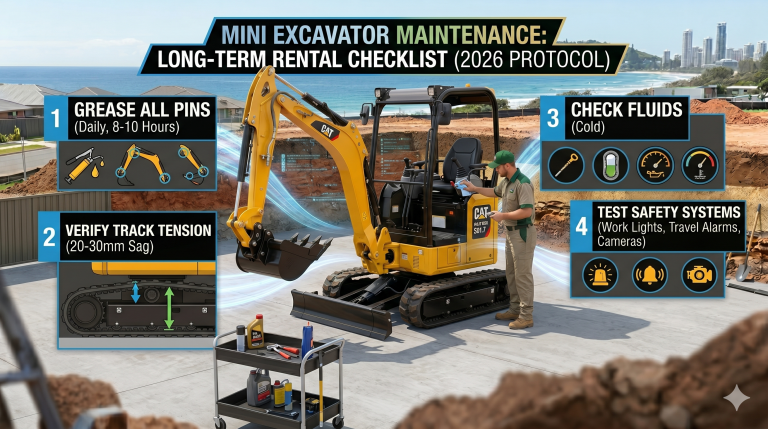
How do I maintain a mini excavator during a long-term hire? The key to avoiding “downtime” and extra fees is a daily pre-start walkaround. Focus on three “lifeblood” areas: Greasing pivot points every 8–10 hours of use, checking track tension (ensure there is about 20-30mm of “sag” at the midpoint), and monitoring the fuel-water separator to prevent engine contamination.
The Maintenance Deep-Dive
For 2026, modern machines like the Cat Next Gen or Kubota KX series come with digital monitors, but manual checks remain the gold standard.
- The Grease Gun is Your Best Friend: Every moving joint (the boom, arm, bucket, and blade) has a grease nipple. On the Gold Coast, where sand is prevalent, grit can enter these joints and act like sandpaper. Greasing “purges” the dirt out. If you hear a “squeak,” the damage is already starting.
- Track Tension Logic: Too tight, and you’ll snap a track or wear out the rollers. Too loose, and the track will “de-track” while you are turning on a slope. If you are working in mud, keep the tracks slightly looser to allow the mud to pass through the sprockets.
- Hydraulics and Air: Check for “weeping” hoses. A small drip today is a high-pressure burst tomorrow. Similarly, if you are working in dusty hinterland conditions, blow out the air filter with a compressor every second day to keep the engine breathing.
Financial Impact:
Most hire companies charge a “Cleaning and Servicing Fee” if a machine is returned caked in concrete or with dry joints. A 15-minute daily maintenance routine can save you $300+ in end-of-hire penalties.