Medium-scale projects are where planning matters most.
Too small for heavy construction machinery.
Too large for entry-level equipment.
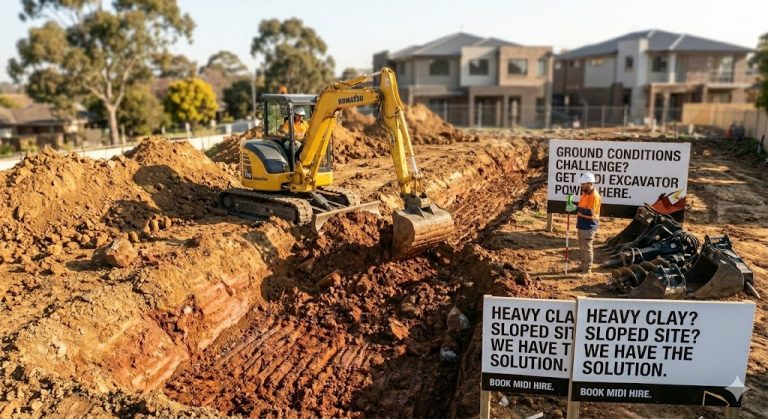
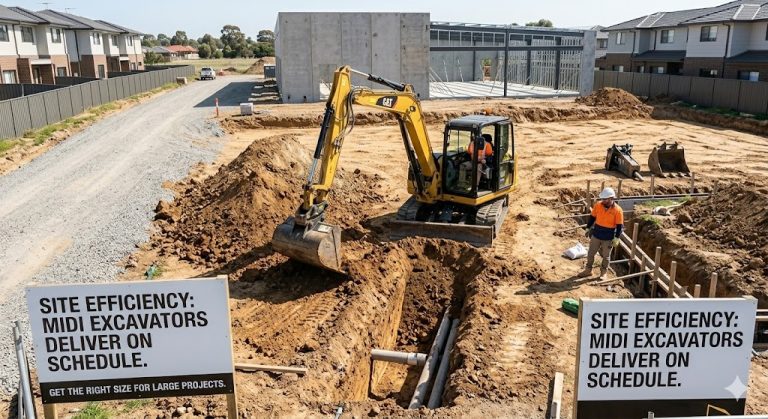
This is where compact excavators shine.
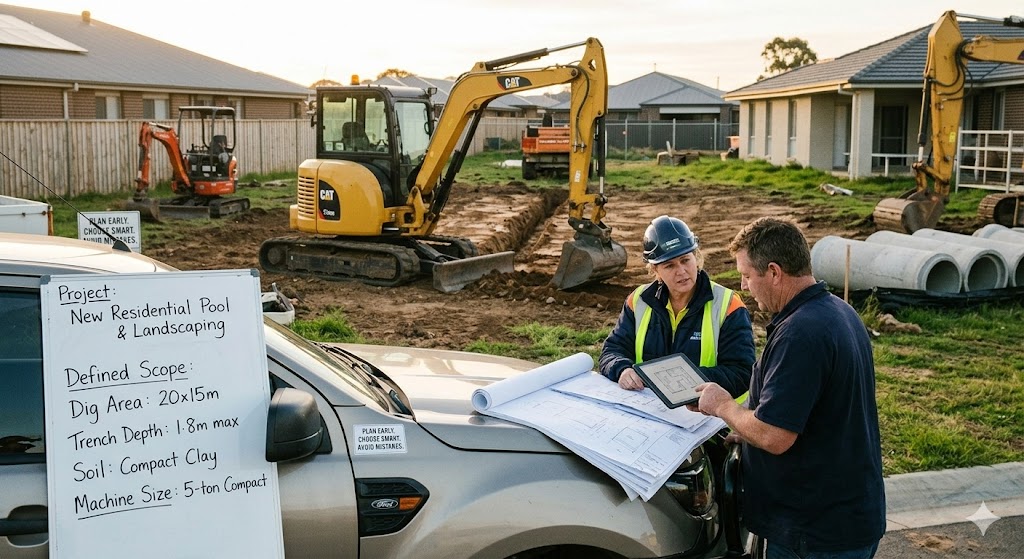
Step 1: Define Project Scope Clearly
Before hiring equipment, define:
- Total dig area
- Required trench depth
- Soil type
- Access width
- Timeline
A clear scope prevents hiring too small or too large.
Step 2: Match Machine to Job Size
Compact excavators (3–6 tonnes) offer:
- Balanced power
- Controlled precision
- Better maneuverability than larger units
- Stronger output than mini machines
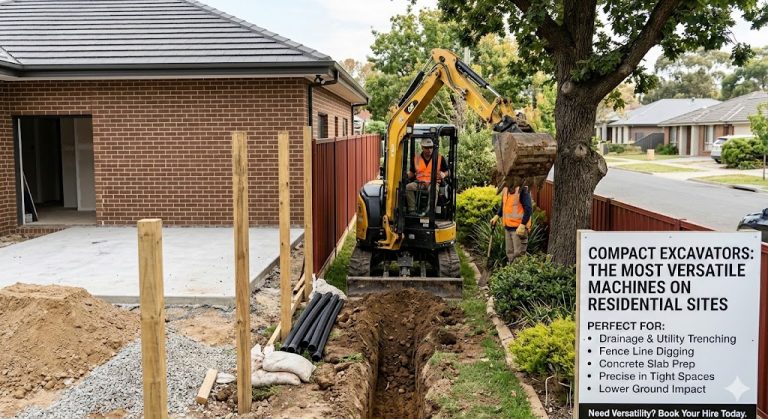
They’re ideal for:
- Drainage lines
- Pool excavation
- Landscaping prep
- Driveway preparation
Step 3: Plan for Efficiency
Efficiency depends on:
- Continuous digging capability
- Reduced repositioning
- Stable lifting
- Smooth hydraulic response
Compact machines provide a balance between speed and control.
Common Mistakes to Avoid
- Choosing equipment based only on price
- Underestimating the dig depth
- Ignoring ground conditions
- Not factoring in access clearance
Planning prevents mid-project upgrades.
FAQs
What size project is ideal for a compact excavator?
Medium-scale residential and light-commercial projects, such as pool excavation, drainage, and landscaping.
Is a compact excavator powerful enough for foundation work?
Yes, for medium-scale residential foundations and footings.
How does a compact excavator differ from a mini excavator?
Compact excavators offer greater power, digging depth, and lifting capacity while remaining maneuverable.
🏗 Planning a Medium-Scale Project?
Choosing the right equipment early saves time and stress.
Reach out today to discuss your project scope and secure the right compact excavator.