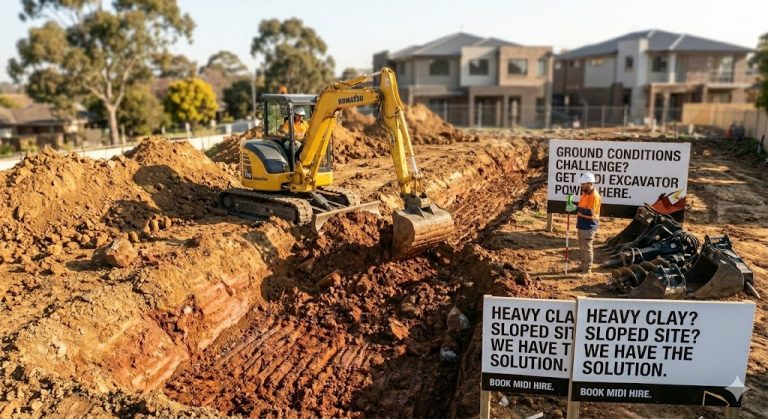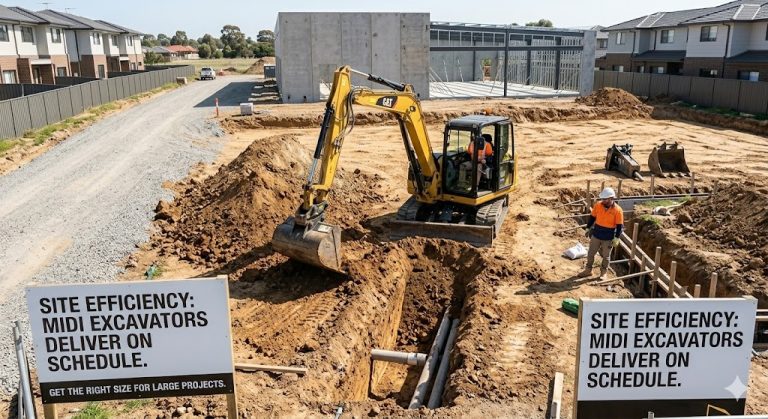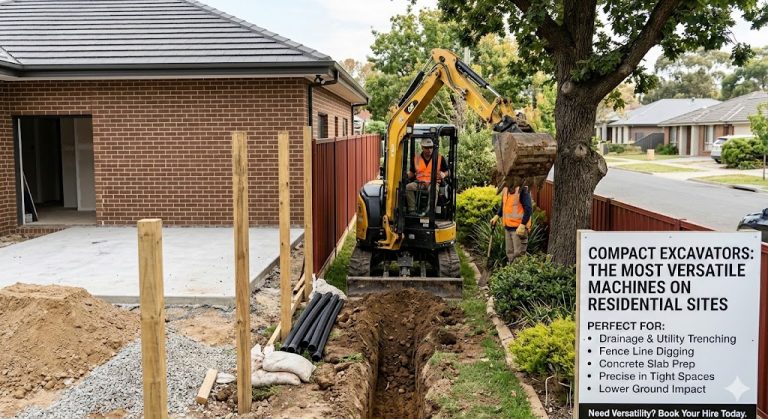
Not all soil is equal. Some sites dig like sand.
Others feel like concrete.
If you’ve ever hit dense clay or compacted fill, you already know — machine size matters.
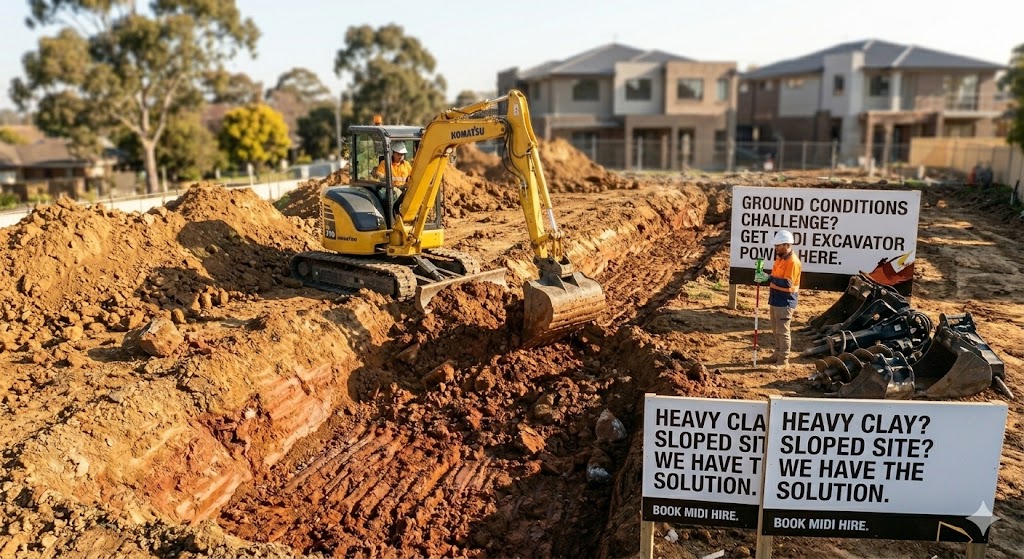
How Soil Type Affects Equipment Choice
Before choosing equipment, consider:
- Clay-heavy soil
- Rocky sublayers
- Compacted construction fill
- Sloped terrain
- Water-logged ground
These conditions demand stability and torque.
A smaller machine may struggle. A mini excavator handles resistance better and maintains a consistent digging force.
Stability on Uneven or Sloped Ground
Heavy-duty earthworks often involve:
- Sloped blocks
- Cut-and-fill sites
- Structural leveling
Mini Excavators Offer:
- Wider stance
- Increased counterweight
- Better balance when lifting
This reduces tipping risk and improves precision.
Attachment Performance
Heavy-duty projects often require:
- Augers
- Hydraulic breakers
- Rippers
- Larger buckets
Mini machines’ power attachments work more efficiently, improving performance and reducing strain.
Safety Considerations
Undersized machines can:
- Overwork hydraulics
- Cause instability
- Increase operator fatigue
- Extend exposure time on site
Correct equipment reduces risk and improves jobsite safety.
FAQs
Why does soil type matter when hiring an excavator?
Dense or rocky soil requires higher breakout force and stability, which mini excavators provide better than smaller machines.
Are mini excavators suitable for retaining wall projects?
Yes. They are commonly used for structural footing excavation and retaining wall preparation.
Can mini excavators use heavy attachments?
Yes. They handle hydraulic breakers, augers, and larger buckets more effectively than mini excavators.
🚧 Need Power That Matches Your Site Conditions?
If your project involves challenging soil or structural earthworks, hiring the right machine makes all the difference.
Contact us to discuss your site conditions and secure the right mini excavator for the job.