What Is a Mini Excavator?
A mini excavator is a mid-sized machine that typically weighs between 5 and 8 tonnes. It sits between a mini excavator and a large construction excavator in both power and size.
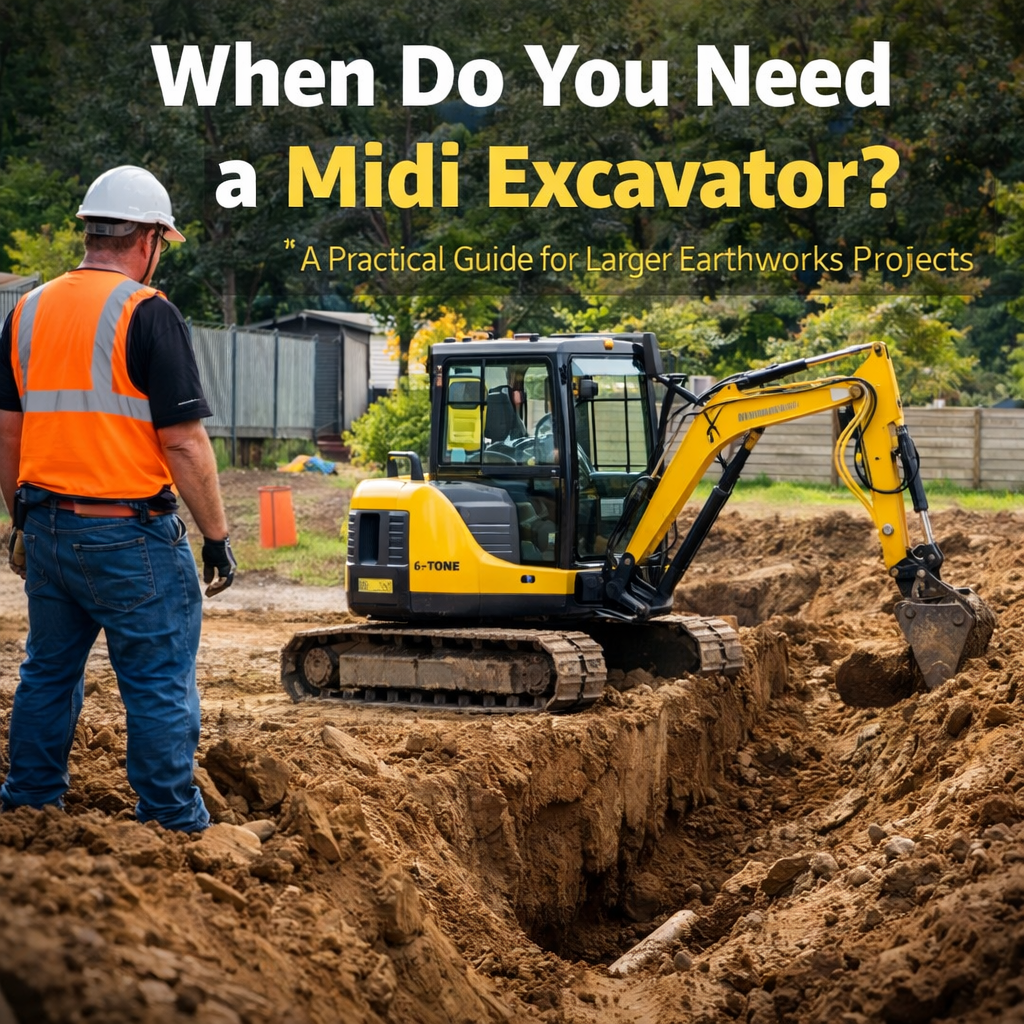
It’s designed for projects that are:
- Too large for a mini excavator
- Too tight for a full-sized excavator
- Heavy enough to require stability and a deeper digging capacity
If your job involves bulk earthmoving, trenching for services, or structural excavation, a mini excavator is often the sweet spot.
When a Mini Excavator Is Not Enough
Many people start with the idea of hiring a local mini excavator. It makes sense — they’re compact and easy to maneuver.
But here’s when a mini makes more sense:
- You need deeper trenching
- You’re moving large volumes of soil
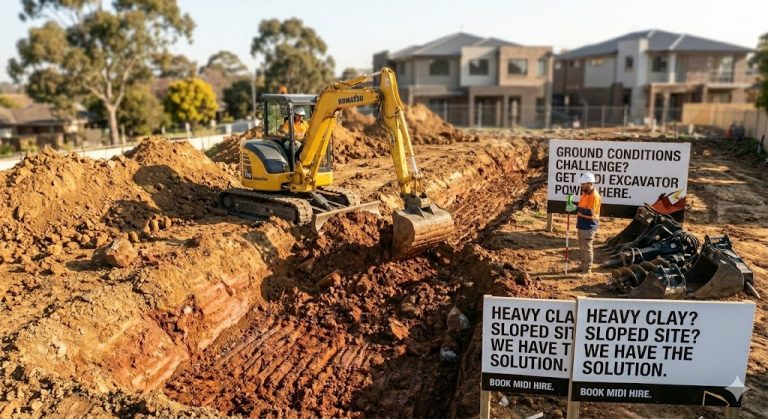
- The ground is compacted or clay-heavy
- You require heavier attachments
- Stability is critical on uneven ground
A mini machine can struggle with power and lift capacity on bigger jobs. That’s where stepping up to a mini unit saves time and labour.
Projects Best Suited for Mini Excavators
Mini excavators are commonly used for:
- Large residential site cuts
- Driveway excavations
- Retaining wall preparation
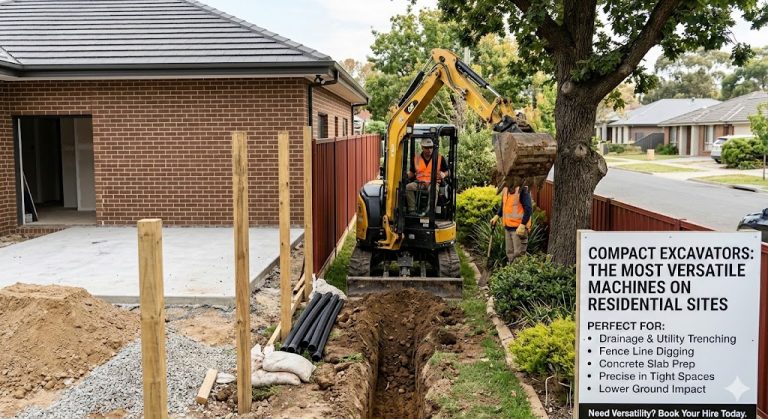
- Drainage and stormwater trenching
- Pool excavation (larger designs)
- Commercial landscaping
- Structural footings
They provide more breakout force and digging depth while still being maneuverable enough for suburban properties.
Why Contractors Prefer Mini Excavators for Heavy Earthworks
Contractors often choose mini machines because they:
- Reduce manual labour
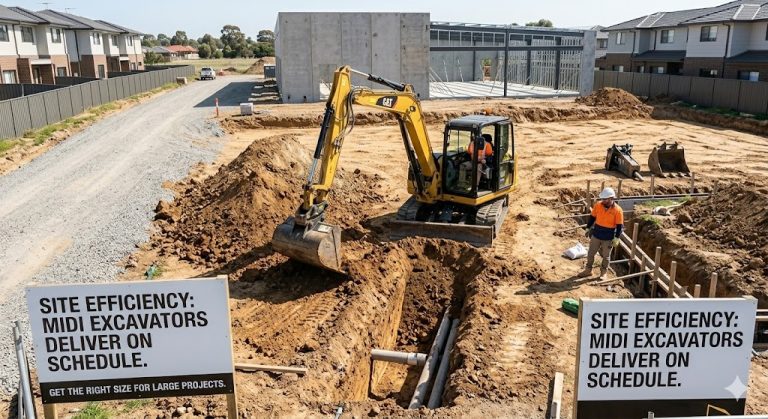
- Improve jobsite efficiency
- Handle attachments better
- Offer better lifting capacity
- Minimise downtime caused by underpowered equipment
Hiring the correct machine size isn’t about cost alone — it’s about productivity. The wrong machine can slow a project by days.
Key Differences: Mini vs Mini Excavators
| Feature | Mini Excavator | Mini Excavator |
| Weight | 1–4 tonnes | 5–8 tonnes |
| Power | Light to moderate | Moderate to high |
| Ideal Use | Tight access, small jobs | Medium to heavy earthworks |
| Dig Depth | Limited | Deeper capability |
| Lift Capacity | Lower | Higher stability |
This comparison helps clarify when upgrading makes sense.
How to Choose the Right Size for Your Project
Ask yourself:
- How deep does the trench or cut need to be?
- How much soil needs to be moved?
- Is access tight?
- Will attachments be used?
- Is the ground soft, compacted, or rocky?
If you’re unsure, discussing project scope with an experienced operator often prevents costly mistakes.
FAQs
What is a mini excavator used for?
A mini excavator is used for medium to heavy-duty earthworks such as trenching, site cuts, driveway excavation, and structural footing preparation.
How big is a mini excavator?
Most mini excavators weigh between 5 and 8 tonnes and offer greater power and digging depth than mini excavators.
Is a mini excavator better than a mini excavator?
It depends on the job. For larger projects requiring deeper digging and higher lifting capacity, a mini excavator is typically more efficient.